
Classic Mac Games 90s
- Old Mac Games
- Classic Mac Games 90s Songs
- Old Mac Games 90s
- Classic Mac Games 90s Games
- 1990s Mac Games
- Classic Mac Games 90s Music
- Classic Mac Games 90s 2
Real talk: I think learning is always fun. (Yes, I am absolutely a Ravenclaw. Why do you ask?) But when it’s a literal game? Then it’s even better, especially when you’re a kid. This is probably why there were so dang many fantastic educational '90s computer games — the rise of home computing (and, by extension, the rise of computing in the classroom) during the 1990s opened up a whole world of possibilities, including tons of ways to make learning a blast for the up-and-coming generations. And you know what? These games are still fun. And yes, I say that as a fully grown adult; don't knock going back and replaying the games you loved when you were 10 until you've tried it. Seriously.
As is often the case with the things we remember from the '90s, a lot of the games those of us who grew up during the decade filled our days with were originally developed and released long before the ‘90s. That's perhaps the reason '80s babies also have a certain degree of fondness for them; many of them actually dated back to the decade in which we were born. Some were part of long-running series, while still more of them received a number of remakes and reboots as technology improved. Though the graphics may be laughable now, just remember — once upon a time, they were the pinnacle of technological achievement.
- Nov 27, 2017 The Best PC Games of the 1990s. LucasArts released a number of classic Point-and-Click adventure games in the 90s. Dark Forces became one of the best selling PC games of the 90s.
- Apr 20, 2017 On April 1, Internet Archive launched Software Library: Macintosh, a collection of old Mac games and applications that will have your little '90s heart aflutter. Not only can you play your.
A platinum sanctuary for old software of the classic Mac OS era. Rediscover Mac treasures of the past! Most viewed games. Macintosh Repository served 1064228.
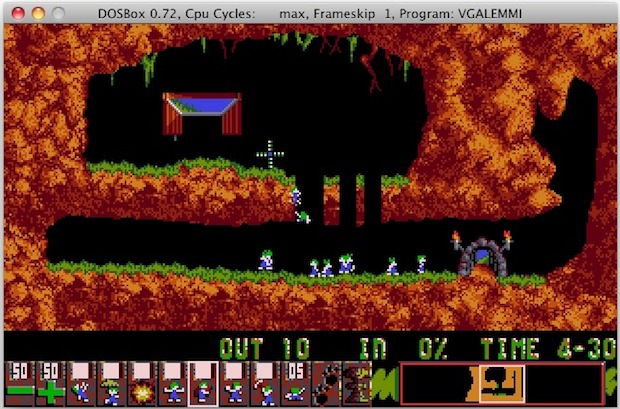
So, in the spirit of nostalgia, here are 15 computer games from the ‘90s that made learning incredibly fun. Most of them are available to play on the internet now, so in these cases, I’ve also included links to where they can be found — frequently either an app store or the Internet Archive’s glorious collection of browser-based, emulated DOS games.
Have fun, kids!
1. Number Munchers and Word Munchers
The Munchers series was created by the Minnesota Educational Computing Consortium — or, under a name with which you might be more familiar, MECC. I don’t know about you, but I have vivid memories of seeing those four letters scrawled across a huge number of the educational games I played at school; the company dated back to 1973 and was also responsible for games like the business simulator Lemonade Stand and the storytelling game Storybook Weaver.
The Munchers series' conceit was simple: They taught kids the basics of math and grammar. Number Munchers was originally released in 1990 for the Apple II, while Word Munchers had arrived a few years earlier in 1985. Gameplay-wise, both series functioned kind of like a turn-based version of Pacman; the object WAS to “eat” all of the numbers or words that correspond to the instructions on the screen (multiples of five, etc.) without getting caught by a Troggle.
What exactly are Troggles? No idea, but they're insatiable.
2. Math Blaster!
The original Math Blaster! was released in 1983 by the now-defunct developer Davidson & Associates, but it wasn’t until the ‘90s rolled around that the series really hit its stride. Between 1990 and 1999, a whopping 20 games were released in the Blaster Learning System — and somewhat astonishingly, a few more follow-ups trickled out between 2000 and 2008. Math wasn't the only subject addressed by the series; Reading Blaster!, for example,taught language arts. A Science Blaster! Jr. was also released at one point, but due to lack of popularity, it was the only entry in the series to tackle science-based topics.
Math Blaster! is available to play online now; additionally, a bunch of ports of the math-teaching game arrived as Android apps in October of 2013, so the series appears to be alive and well (if somewhat frozen in time).
3. Scooter’s Magic Castle
Like many early computer games, Scooter’s Magic Castle consisted of a relatively large environment full of what we now call mini-games. Released under Electronic Arts’ EA*Kids umbrella in 1993, the game involved players either assuming the role of or simply helping out an elf-like creature wearing a blue tunic, red sneakers, and a red baseball cap turned backwards (the '90s!) as they worked their way through a variety of activities. These activities were designed to teach everything from problem-solving to typing; you could even make terrible MIDI music by jumping up and down a set of colorful stairs.
Scooter's Magic Castle also has a super earworm-y theme song, so if you now have it stuck in your head for the rest of the day… sorry. My bad.
4. The Carmen Sandiego Series
No list of educational ‘90s computer games would be complete without an appearance by this mysterious, trench-coated criminal mastermind. The four major entries in the series — Where in the World, Where in the U.S.A., Where in Europe, and Where in Time — were all first released by Broderbund between 1985 and 1989; the deluxe versions of Where in the World and Where in the U.S.A., however, came along in 1992 and 1993, and as a result, it’s those versions that most ’90s kids remember so fondly. There was no better way to learn geography — and hey, Where in the World deluxe is playable at the Internet Archive, so it looks like I just figured out what I’m doing with myself this weekend.
Fun fact: A Facebook version of Where in the World was available to play in 2011; I’m not sure how I missed it, but it stuck around until 2012.
5. Kindercomp
I’m really dating myself here, but Kindercomp is probably the first computer game I remember playing. Initially released in 1983 by Spinnaker Software Corporation, it was exactly the kind of game that appealed to very young children: It consisted of six mini-games that taught kids their way around a keyboard by having them draw pictures, match pairs, and other simple activities. The one I remember is the 1984 version, but the Internet Archive has a whole bunch of ‘em available, so knock yourselves out. If you have a kid in your life who's around 3 years old, it might be a fun time to play with them!
6. Mario Teaches Typing
As a child in a house full of gamers, naturally I adored Mario Teaches Typing, which first hit the scene in the early '90s. One of a number of educational Mario games released between 1988 and 1996, it put the pixelated plumber to good work teaching us how to type. Hitting the correct key would prompt Mario to hit blocks, jump on Koopa Troopas, and more. Nintendo had almost no hand in the development of these games (a far cry from the tight hold the company tends to keep on the reigns of its properties nowadays), but they proved popular all the same.
I’ll be honest, though: I actually learned how to type by frequenting chat rooms. As a result, I can type an impressive number of words per minute; however, I definitely don’t use the “correct” fingers. Ah well. Whatever works, right?
7. Mavis Beacon Teaches Typing
Mario was second perhaps only to Mavis Beacon in the world of beloved typing programs — and what’s more, it’s still around: The first version debuted in 1987, and it has remained in production, continuing to get new and improved updates, pretty much ever since. You can download it for free right now if you like.
I was, by the way, absolutely devastated to learn recently that Mavis Beacon isn’t a real person. She was invented to give a face to the program in an era when human people weren't regularly associated with computer and video games (everything is a lie). 1985's The Chessmaster 2000had shown how effective putting a real person on the cover of a computer game could be; the wizard on the box was played by actor Will Hare, reported Vice in 2015. Mavis became the next incarnation of this strategy, as depicted by Renee L'Esperance.
8. 3D Dinosaur Adventure
Launched by Knowledge Adventure in 1993, 3D Dinosaur Adventure was little more than a glorified encyclopedia specializing in what we knew about dinosaurs at the time (much of which has since been determined to have been terribly, terribly wrong, even if the brontosaurus did make a triumphant comeback in 2015). That didn’t matter, though, because dinosaurs.
Also contained within 3D Dinosaur Adventure was a mini-game called 'Save The Dinosaurs' — which, to be perfectly honest, was downright terrifying. It required players to make their way through a series of maze-like hallways to find and rescue 15 types of dinosaurs before time ran out — and by 'before time ran out,' I mean 'before the comet that wiped out all of the dinosaurs crashed into the Earth, while you and the dinos were still on the planet.'
No pressure.
9. Odell Lake
Like the Munchers series, Odell Lake was created by MECC and therefore a fixture for many an elementary school computer lab. It debuted in the early 1980s, but it stuck around for long after that; it’s why so many of us ‘90s kids remember playing it when we were young.
In all honesty, it wasn’t really that exciting — all you did was swim around as a fish, trying to figure out whether you should eat, ignore, or run away from every other fish you encountered. I’m also not totally clear on why this was classified as an educational activity; Giant Bomb suggests it taught kids about food chains and predator/prey relationships, but I... clearly did not get that takeaway from it. But hey, I suppose survival skills are important, too, right?
Odell Lake is a real place, by the way; it’s in Oregon. Just, y’know, FYI.
10. Reader Rabbit
You know the old saying, if it ain’t broke, don’t fix it? That’s pretty much the Reader Rabbit series in a proverbial nutshell: It’s so effective at teaching kids to read and write that it’s survived all the way since the first game launched in 1984. There's a huge list of Reader Rabbit titles scattered throughout educational computing history; at the series' height in the late '90s, six to seven titles in the line were being released each year. The output has since tapered off, of course, but the remarkable thing is that it's still around.
The last major PC release for a Reader Rabbit game was in 2010, but a number of titles have debuted since then as iOS apps. Many of the games are also, of course, available to play online courtesy of the Internet Archive.
11. Mixed-Up Mother Goose
Mixed-Up Mother Goose didn't have a ton of replay value; the point was to sort out all of the nursery rhymes that had gotten 'mixed up' and put them back in order, so after you did that once, your work there was done. However, the world in which the game existed was so delightful that I played it over and over again as a small child. Released by Sierra in 1987, with a handful of remakes appearing at regular intervals throughout the ‘90s, it was a point-and click adventure game that encourage problem-solving; it also gets bonus points for having tons of relatively diverse avatar options — something which was even rarer back then than it is now. (And, y'know, it's still a problem decades later, so that's... really saying something.)
12. Super Solvers: Treasure Mountain
I’ll be honest: I actually have no recollection of playing 1990’s Treasure Mountain, Treasure Cove, or any of the other Treasure titles in this series. Many other people seem to remember these games fondly, though, so I think they deserve an inclusion here. Like many educational games, 1990's Treasure Mountain — a creation of The Learning Company, like the Reader Rabbit series — involved solving riddles that led you to keys that unlocked each successive level. You also collected treasure as you went, returning it to the chest at the top of the titular mountain once you got there. A prize was awarded for depositing the treasure back into the chest.
Treasure Mountain and Treasure Cove both focused on general reading comprehension and basic math skills; however, other entries in the Super Solvers series tackled more specialized skill sets, including deductive reasoning and logic.
13. The Dr. Brain Series
Admittedly, I never played the fourth game in Sierra On-Line's long-running Dr. Brain series, and I wasn’t a big fan of the third — but the first two? Classic. The Castle of Dr. Brain, released in 1991, and the follow-up, 1992’s The Island of Dr. Brain, were a step up from a lot of the other puzzle-solving games out there; they were geared towards slightly older kids, so there was more to each puzzle than simply picking a matching shape or selecting the next number in a sequence. We’re talking intense logic puzzles that might stump even some adults.
Sierra merged with another educational game company, Bright Star Technology, following the release of The Island of Dr. Brain; the franchise was then handed over to a team from Bright Star, which might explain why 1995's The Lost Mind of Dr. Brain and 1996's The Time Warp of Dr. Brain were so different from the first two entries in the series.
14. Eagle Eye Mysteries
Like Scooter’s Magic Castle,1993’s Eagle Eye Mysteries and 1994’s Eagle Eyes Mysteries in London came to us courtesy of the now sadly defunct EA* Kids division of Electronic Arts. Unlike Scooter’s Magic Castle, though, they were meant for an older crowd. The games followed siblings Jake and Jennifer Eagle as they solved mysteries throughout first their hometown, then in London not — unlike a modernized, digital version of Encyclopedia Brown. If you were a pint-sized fan of whodunnits, this was the game for you; it helped you learn how to piece together different pieces of information until a complete picture emerged. A valuable skill to have, I feel.
15. Oregon Trail
Ah, yes: Oregon Trail, the game responsible for countless deaths by dysentery, many drownings of oxen who tried and failed to ford the river, and a plethora of memes. For anyone who grew up playing it, it's the gift that keeps on giving.
Speaking of people who grew up playing it, perhaps unexpectedly large swathe of the population falls into this category. Originally developed in 1971 and launched by MECC in 1974, roughly 20 versions of the game have been released since then — the most of which, believed it or not, arrived in 2018 as a handheld game similar to the Tiger Electronics games a lot of '80s kids grew up playing. Ostensibly, it taught kids what it was like to travel the Oregon Trail in a covered wagon in 1848; practically speaking, though, it mostly taught us about frustration.
Also: Never ford the river. Always caulk your wagon and float it.
Old Mac Games
Your oxen will thank you.
This article was originally published on
Top 10 Classic Mac Games
Classic Mac Games 90s Songs
1. Crystal Quest (1987)
Crystal Quest is a fast-faced game in which you control a circular spaceship that shoots its way through stages. The game is completely controlled by mouse, but what really makes this one stands out are the hilarious sound effects. Passing a portal, picking up a star bonus, or shooting a blop enemy and most enemy sounds are all accompanied by funny, weird and memorable audio tones most Mac gamers will instantly recognize when hearing them.
2. Shufflepuck Café (1988)
Shufflepuck Café is probably the earliest game I played. This air hockey game / 3D Pong clone is also completely controlled by mouse and was originally developed for the Apple MacIntosh, but received many ports on other platforms later on. The game is memorable for its frantic gameplay and weird enemies (like the robot waiter on the picture below).
3. Glider PRO (1995)
Glider PRO was created by the same developers as Crystal Quest (namely Casady & Greene). In this game you control a paper plane flying through a house, while avoiding furniture and making use of hot air streams to keep floating up. The game has easy on the eye graphics, nice relaxing music and is easy to control - but is harder than you might except.
4. Power Pete (aka Mighty Mike) (1995)
Power Pete, later released as Mighty Mike, was packaged with Mac OS 7 on MacIntosh Performa models. The game was developed by Pangea Software, a company specialized in Mac games. It is a sort a Gauntlet game for kids, with funny sounds, nice graphics and easy controls, but I feel the game lacks a little depth on the long run.
5. Marathon (1994)
Marathon is a game that made Mac games mature. Bungie, that later went on to develop Halo, created an interesting and atmospheric first person shooter with many puzzle elements. The actually playing field is quite small and the enemy animations are a bit choppy by recent standards. It's a good game, but in all honesty I didn't enjoy it as much as Wolfenstein 3D and Doom, that eventually also came available for the Mac.
6. Bubble Trouble (1996)
Ambrosia Software was a shareware company that developed many high-end shareware games for the MacIntosh. Among the best of their games is Bubble Trouble (that has nothing to do with Bubble Bobble, if you were wondering). In this wonderful and colorful game you take control of a fish that has to collect diamonds by pushing through a sort of bubbles and avoiding enemies. It's very addictive and well produced and could have easily pass through for a true commercial release.
7. Hellcats over the Pacific (1991)
Hellcats over the Pacific is a very easy and accessible flight simulator, with 3D polygonal color graphics that were revolutionary for its days. The enige of this game was later also used for the more advanced F/A-18 Hornet flight simulator game.
8. Swoop (1995)
Swoop is another game by Ambrosia Software and probably the best Galaxian clone on the MacIntosh. This game has an amazing sound track, and great audio effects. It also looks very good. Again, high above shareware quality, like all of Ambrosia's shareware titles for the Mac.
9. Firefall Arcade (1993)
Firefall Arcade, also released by Pangea Software, is one of my favorite Mac games of all time - and also the best Centipede clone I ever played. The game can be controlled by mouse or keyboard, but I prefer the latter. The sound effects are great, but the best thing about Firefall Arcade is the AMAZING soundtrack. Regular levels are alternated with bonus stages, which is great. It's also a blast to try to better your own or the high scores of your friends. Along with Crystal Quest probably the Mac games I played the most.
10. Pathways into Darkness (1993)
Pathways into Darkness is the predecessor of Marathon and that game is the predecessor of the successful Halo franchise. Developer Bungie created a combination of a first person and an adventure game. The playing field is actually very small, because most the screen is used for other windows in which you have to manage your weapons and objects. Controlling the game (with keyboard for gameplay and mouse for object management) takes some time getting used to, but gets interesting in the long run.